China and India have been leading shipments of cellphones for a long time. This is another very interesting data point that shows that China is now leading in the shipment of smartphones. This brings an valuable question: what are the key applications used on these phones: social media, games, enterprise applications, all of the above?
Here's a CNET article talking about the top 5 hottest smart phone apps in 2011: LBS, messaging, photo, lifestyle, blogging. Apple and Google are still leading in Gartner's Mobile Consumer Application Platform
Showing posts with label mobility. Show all posts
Showing posts with label mobility. Show all posts
Friday, March 16, 2012
Saturday, February 18, 2012
Smart phone shipments top PCs for the first time ever
We have reached a very interesting inflection point: more smartphones are shipped every day than PCs. This is radically changing the way applications should be designed, distributed and consumed. Developers are already designing their applications with a mobile interface first. With the back-end moving to the cloud and the front-end to mobile devices, we are at a very important junction in the world of IT. On a less serious note, there are now more Apple iPhones sold per second than there are babies born in the world.


Friday, January 20, 2012
AT&T to bring out Nokia phone with Windows
Last week, Steve Ballmer joined Nokia CEO Stephen Elop in unveiling the Lumia 900, their newest phone at a press event in Las Vegas (ahead of CES). The device represents Nokia and Microsoft's best chance yet to break Google and Apple's hold on the U.S. smartphone market. The new phone will use AT&T's LTE wireless data network. Since this is Nokia and Microsoft's (last?) chance to disrupt the most lucrative phone market, I can't wait to get my hands on one of them and experience the new device. I also would like to hear about their developer plans.
Wednesday, December 21, 2011
Amazon sought to buy BlackBerry maker RIM
Looks like more bad news are piling up for RIM. It makes sense for Amazon to control another corner of the network triangle. I just wish they had better options than RIM at this point. I haven't seen a good plan and value proposition from Amazon or RIM to recruit the developer community to develop on their products. Until then, their products (tablets or phones) will lack a vibrant application ecosystem.
Saturday, December 17, 2011
Will BlackBerry survive 2012?
Good article here. The answer is no. According to research group Canalys, RIM's share of the smartphone market in the US fell to 9.2% in the third quarter from 24% in the same period last year. You don't recover from this kind of numbers, not unless you have a great plan in the works.
There might be room for another developer environment on top of iOS and Android, but it is not going to be RIM (Microsoft is not going to abandon a market that could grow into a trillion dollars). RIM totally missed the apps boat and doesn't have an attractive value proposition for users and developers. Why would you spend time and money porting your apps on a platform with a declining number of activated users?
There might be room for another developer environment on top of iOS and Android, but it is not going to be RIM (Microsoft is not going to abandon a market that could grow into a trillion dollars). RIM totally missed the apps boat and doesn't have an attractive value proposition for users and developers. Why would you spend time and money porting your apps on a platform with a declining number of activated users?
Tuesday, December 6, 2011
Android Market hits 10 billion downloads
 Last summer, I discussed the 15 billion downloads from the iTunes App Store, and today, Google confirmed that Android Market hit the 10 billion mark. What are the chances that Android Market overtakes iTunes App Store:
- Android App downloads are growing faster than iOS' (took almost a year for Apple to double download but just over 6 months for Android)
- More Android devices activated every day than iOS'
- Open vs. Closed
- Apple is delivering always innovative and flawless products and other vendors are playing catch up
- Superior user experience across all Apple's products
Monday, October 3, 2011
Big five IT trends

Very good article here. Not that the author is a visionary (he would have been if the article had been published 3 years ago), but he did good job articulating the major IT trends.
If you don't have time here are the big five IT trends:
- Smart Devices and Tablets
- Social Media
- Consumerization of IT
- Cloud Computing
- Big Data
Monday, August 15, 2011
Google to Buy Motorola Mobility for $12.5 Billion
Looks like Larry Page didn't waste time since he moved to the CEO position. It is hard to believe that the acquisition was made for Motorola's hardware business. Google wouldn't risk alienating all the smart phone makers (Samsung, HTC) who are using the Android operating system. It seems to me that Google wanted to make sure that no patent lawsuit would stop Android's growth. I see a few dark clouds on the horizon for this acquisition:
- Looking at the problems AT&T is facing with the T-Mobile acquisition, I wouldn't be surprised to see the Feds looking at this transaction very closely and, despite approving other patent acquisitions, investigating the run for patents.
- Set top box, smart phone and tablet manufacturers may ask Google to reconsider the move or get guarantees from Google about the future of their relationships.
- Nearly 20,000 employees to integrate in a software, Silicon Valley culture-driven company. It will be a challenge for both sides to adjust to the new environment.
There is no doubt that there is a huge patent war going on between Google on one side and Apple and Microsoft on the other side. What will happen when they run out of patents to buy?
Saturday, July 16, 2011
The future of mobile is context
Interesting blog entry from Forrester which supports the recent release of their report: "The Future of Mobile is User Context". User context is nothing new. Back in 2009, I discussed context-aware technologies. Julie Ask gives some examples of context-aware scenarios and recognizes that these are not new, and that companies are already developing them. What I found particularly interesting was her definition of user context: “the sum total of what your customer has told you and is experiencing at his moment of engagement."
This, undoubtedly, centers context-aware services around social networks content and platforms.
This, undoubtedly, centers context-aware services around social networks content and platforms.
Friday, July 15, 2011
iTunes App Store Surpasses 15 Billion Downloads
 The iTunes App Store had only 500 applications when it launched in 2008, now it has over half a million applications if you count iPad's. The 15-billion download number is staggering. Talk about a Long Tail! The App Store is reaching this milestone only one month after the iTunes Music Store reached the same number (iTunes Music Store launched in 2003, 5 years before the App Store).
I have been a strong supporter of a vibrant developer community to establish a platform, this is one of the best illustrations we've ever seen so far.
Google's Android Market is still playing catch up (Apple must be feeling them breathing over their neck though), but if you add their numbers, this truly is an incredible growth and remarkable achievement.
Thursday, July 14, 2011
The 8 most important types of collaboration apps for smart phones
According to this article which covers a recent Forr ester report, the following applications will matter the most on smart phones and tablets:
I found the following figure quite valuable as we always discuss the value of rich vs thin vs native type of mobile application. Clearly, the back-end is moving to the cloud while the front-end is mobile or better: multi-channels.
 ester report, the following applications will matter the most on smart phones and tablets:
- E-mail and calendars
- Document-based collaboration
- Web conferencing
- Activity streams
- Presence and chat
- Social collaboration
- Expertise location
- Videoconferencing
I found the following figure quite valuable as we always discuss the value of rich vs thin vs native type of mobile application. Clearly, the back-end is moving to the cloud while the front-end is mobile or better: multi-channels.
Thursday, April 14, 2011
In-house 'app stores' ease tablet-management woes
 Excellent article from ComputerWorld about the challenges of managing BringYourOwnDevice (BYOD) in the enterprise. The consumerization of IT and the proliferation of new devices like the ipad are changing the face of application management within the enterprise. The article highlights the three approaches to application deployment:
- Use internal app store to control delivery and update of employee LOB apps
- Use mixed model to allow employees to use externally developed apps
- Total app freedom
Sunday, March 20, 2011
AT&T To Acquire T-Mobile USA In $39 Billion Deal
The acquisition spree that started in 2005 continues. T-Mobile was the only one significant independent GSM carrier left in the US market and, logically, AT&T just acquired it. But the Feds need to approve it and this might not be as easy as it looks. The Feds will say that the merger will against the Communications Act and the concentration of market share in fewer players will hurt competition and innovation. In the US, AT&T and Verizon are in battle to become the dominant leader in controlling the Service Provider end of the network triangle. Can they succeed (and profit) without controlling another end?
Friday, January 14, 2011
Mobile App audience is still largely male, young and affluent
 This won't be a surprise to anyone who followed the mobile market for sometime. The same demographic was the sweet spot for wireless voice services and then wireless data services providers. More details here. An in due time, as it did for the wireless services above, wider adoption across age, gender and revenue will take place.
Thursday, May 13, 2010
SAP acquires Sybase for $5.8 billion
This acquisition has the potential to upend the software industry in a significant way. Sybase doesn't have the greatest database market share but its mobility software will allow SAP to connect its enterprise software (including analytics) to billions of devices. Few companies have successfully made key transitions in their business. SAP is in the middle of one them, it looks like they are taking it very seriously.
Wednesday, March 10, 2010
How many Java developers are there?
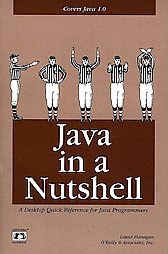 Over 9M according to this blog post. I first looked at Java back in 1996. An engineer at Alcatel brought the first copy of "Java in a Nutshell" and said: "This is the future".
The author of the blog says that at the time of Java's open sourcing in 2007, there were 6 million Java developers and the number of Java developers had been rising at an average of 0.75 million per year during the previous two years. After Java was open sourced, that number shot up to 1 million per year.
Why the success?
From a technical point of view, "Write Once, Run Anywhere" and a solid set of APIs would do the trick.
From a business point of view, Free and a "transparent" Java Community Process would work, but a solid evangelist like Sun Microsystems is also needed.
As the back-end is moving to the cloud and the front-end is moving to mobile devices, Google and Apple are in control of the user experience. Java is still very relevant (through Android for the front-end).
Wednesday, January 27, 2010
Disruption at work: Apple's iPad
 Apple has done it again. The Cupertino guys have, one more time, dramatically changed how people consume digital content with their new iPad device. This is on the same scale as the iPod and iPhone introduction. Digital content streaming is going to explode with the adoption of the iPad. The size, the weight, the resolution and the price make it the perfect device to use in the house. I don't like to look too far back, but Apple is superbly executing on their strategy as discussed in an early 2006 post. So who should be concerned with the new iPad?
- Amazon. It's going to take a lot of work for the Kindle to get any significant traction unless there is a big change in design and business model.
- Carriers. AT&T gets a 3GSM model to increase its subscriber base in an environment where ARPU is declining. Verizon and Sprint must be worried and so should be other carriers worldwide.
- Print Media. It's going to be very interesting to watch how media companies such as newspapers are going to react to the new device. Why do you want to pay for print newspapers/magazines ever again? I'd better monitor newspapers sales and distribution from now on.
- Device manufacturers (Nokia, RIM, Samsung, LG). Apple is all over the house now, they have so many touch points with the consumer that the barriers to entry will be too high for you and you may become irrelevant quickly.
- Google. This is a double-edged sword. Apple was first to market but a lot of the device manufacturers may flock to Google to adopt Android. This looks very much like the open vs closed war that we saw before.
Wednesday, December 9, 2009
Context-aware technology
 I just read an excellent special report on Business Week about context-aware computing. You can read most of the report here. Context-aware software tracks a person's location, interests, buying habits and other information. Smartphones are the perfect device to collect and aggregate that kind of information.
Early 2000, Location Based Services (LBS) already promised unimaginable smart services to serve coupon to shoppers walking by a store and other innovative applications. Handheld location was determined by triangulation based on signal strength from each base station. That architecture never delivered. Several reasons to this failure: hype cycle, precision was not good, wireless service providers controlled the information and wanted their own applications to use that data (not external applications). It is my opinion that the first incarnation of presence services went the same way for the exact same reasons.
Fast-forward nearly 10 years and we have a completely different environment. Apple (and its developers/partners), and Google are in total control of the user experience. Multiple applications are able to use location information to provide advanced services to the users. Yelp provides a unique example of combined use of location and camera with the Monocle feature (augmented reality).
The more source of data you can integrate (social media, CRM), the more phone features you can leverage (camera, accelerometer), the best experience you can provide and the more information about the user you get to track. Good and bad. Best way to enable this is to open up the phone platform (Android, iOS, RIM, Windows) to as many developers as possible. Java was a great example of a rapid and pervasive adoption.
Friday, August 7, 2009
Apple tablet launch expected in November
 Nothing has been officially confirmed. If history is any indication, there will be delays, but the latest is that Apple will announce a tablet PC in September and release by November. There was a lot of talk at the last CES about tablet PCs. These devices have the potential to seriously disrupt the media and consumer electronics landscape. The convergence of microprocessor speeds, multi-touch screens, higher bandwidth and web 2.0 applications is changing the way we consume multi-media content.
As we are approaching 20 million iPhone shipped, the Apple tablet PC could become the ideal companion device in the living room and beyond. I don't think this is going to be a PC/laptop replacement. Nobody in his/her right mind would want to do advanced Excel work on a multi-touch screen. On the other hand, nobody would want to boot up a PC or laptop to do a quick search on the internet or watch videos or pictures.
Apple is solidly controlling two ends of the network triangle.
Monday, September 1, 2008
Gartner Hype Cycle
 This is a very interesting blog entry about Gartner Hype Cycle. This is a great way to look at future, current and past technologies and understand investment and development cycles. They key to understand and use these graphs is to estimate the time to plateau. Monitoring these graphs for a long time, I can tell you that some of the technologies tend to exceed or miss their target dates. They can even get stuck in that "Trough of Disillusionment" and never get out of it.
Subscribe to:
Posts (Atom)